28 June 2007

Old City, New Dreams Review

Just submitted the following post on DublinBlog.ie.

The Old City, New Dreams event last night at the Mill Theatre in Dundrum was very characteristic of its host publication, The Dubliner magazine: a little satire and humour, a little serious intensity (actually quite unusual for The Dubliner), and a little controversy – though decidedly far less controversy than the debacle with Tiger Woods’ wife last autumn. The general idea of the week’s Main Event was a) to hear from a variety of public figures in Dublin about how to make the city a better place to live and b) to elicit participation from the audience. In fact, The Dubliner’s editor, Trevor White, actually invited the audience to interrupt and throw things such as “popcorn or old socks” at the presenters if there was any disagreement. Unfortunately, to this blogger’s great disappointment, no such drama ensued. Had there been a contingent of England Premiership fans, I’m sure it would’ve been a different story.

DJ and concert promoter, Gerry Godley, started out with a rather vague answer to all of Dublin’s problems by quoting The Beatles – “all you need is love.” Though it later became clearer that he was suggesting a public agency to promote culture in the city centre (I think), Trevor summarized his answer numerous times throughout the evening by saying “Gerry Godley wants to promote more free sex – is that what you were getting at Gerry?”

Next up was comedian Arhondia and, as you might expect, she rose from the table to present her solution with a mini stand up comedy act. It didn’t go ever very well, though I’d be willing to giver her a second chance at Battle of the Axe on a Tuesday night. Her solution was free elocution lessons to give all Dubliners North Dublin accents.

Human rights expert and politician Valerie Bresnihan gave an emotionally intense plea to reduce crime and poverty by sending mental health workers from the state into the homes of patients. Though her tone didn’t exactly match the winsome atmosphere that Trevor tried to establish at the beginning, in the end her argument won the audience over.

Feargal Quinn submitted his recommendation to put a roof over the Grafton Street and Henry Street shopping districts. Irish Daily Mail’s Paul Drury put in his bid to preserve the traditional Irish pub in Dublin with a return to traditional Irish music and Guinness served at room temperature. In contrast, cheeky columnist Max McGuinness put forward his recommendation to leave nostalgia behind and ban the Irish language, Bloomsday, and Guinness altogether. Sarah Owens used the occasion to launch her own personal campaign to elect Mr. Tayto as Mayor of Dublin. (She is, afterall, in the advertising business.) And finally, Senate candidate, Stephen Douglas, suggested a plan to “evaporate traffic” in the city centre.

After the night got rolling, there was some response and interaction from various members of the audience. However, it probably could’ve used a handful of football fans or even WTO protesters to spice things up a bit. Overall, it was good craic and a great idea from The Dubliner magazine. The free cocktails at the end were a particularly nice touch. Old City, New Dreams continues for the next two nights at Dundrum’s Mill Theatre.

21 May 2007

Irish Elections

It hasn't been easy to learn about Irish politics, even in this election season. This video was a big help in at least understanding what the political parties stand for.


Hmmmmmm . . . or maybe not.
(HT: ElBlogador)

A Walk Through Dublin

Seems like every time I walk through town these days, something interesting is happening, especially on a beautiful day like today.

I stopped by to chat with Dave (chalk artist in the picture below) and mentioned THESE GUYS. He said that he was thinking about doing some 3D chalk art himself. I also noticed a guy on stilts on the same corner as Dave. I think he was part of a promotional thing for a bank or something.

StiltsBnkPromo

At the top of Grafton Street, something else got my attention: A life size Halo action figure. It was a promo for Halo 3 and for an XBox Live Gaming Centre on S. William Street. Didn't have a chance to check out the gaming centre, but it's now on my radar.

Halo3Pomo

And finally, when I got to the LUAS at St. Stephen's Green, I noticed a group of TV cameras crowding around someone. I think he's a politician, probably chatting about the upcoming elections. He looks familiar. I should probably know who he is. Ooops.

IrishPolitician_IThink

07 May 2007

Dublin Video Collage

02 May 2007

Free Drama Performances

Ireland is well known for its historical wealth of theatrical works, boasting the likes of Oscar Wilde, W.B. Yeats, George B. Shaw, and Samuel Becket among the ranks of Irish playwrights. Kristy and I have been talking for some time now about catching a show at the Gaiety or Abbey theatres. (Looking to see Riverdance at the Gaiety sometime in July.)

One thing we've got in the diary for sure is a free drama event that DUN Laoghaire-Rathdown County Council are hosting for two weekends this month called 'Centre Stage.' Over the course of the festival, there will be 6 shows, though it doesn't sound like they'll all be full length features. (For example, a group called the Balally Players will be performing 'scenes from' Much Ado About Nothing.)

Should be some good craic and, of course, you can't beat the price. =)

30 April 2007

Famine Memorial


FamneMmrl3
Originally uploaded by BKWellcome.
Took some time to take in the Famine Memorial site down the street from the Customs House over the weekend. Incredibly moving memorial. It captures the despair and sorrow of that dark time in Irish history well.

While many historical interpretations and analyses have been offered over the years, here are a few general facts:

  • took place from 1845-52
  • roughly 1 million people perished from starvation and disease
  • a further 1 million people emigrated
  • famine due in part to a potato blight caused by a fungus, and lead to massive crop failure
  • While most of the voluntary relief came from Britain (via the Quakers), historians also note that the British government (Ireland was a part of the UK at the time) demonstrated gross negligence in it's relief efforts. (Okay, maybe this point is moving away from the "general facts" side of things to "interpretation.")
  • The potato blight returned in 1860, 1879, 1890, and 1897 with further starvation and disease, though far less severe than the first famine.
A few quotes from Ireland: A Short History:
"[The Famine] established bitterness and deep resentment towards Britain, which has also had long-standing consequences." (p. 59)

"This overwhelmingly agricultural economy led to three important preconditions which made the Famine worse when it came: overpopulation, poverty and dependence on the potato as the main crop and food source." (p. 60)

". . . perhaps most significantly, the Famine placed the possibility of emigration permanently in the Irish rural mind." (p. 72)

26 April 2007

Dave, Dublin Street Artist


One of the consistent features you're likely to come across as you walk through Dublin town centre is on the corner of College Green and Grafton streets, right across from Trinity College, where Dave does his meticulous art work. I've chatted with Dave a few times and he's always happy to have a conversation. Something you might recognize pretty quickly is that Dave has an English accent. At some point, I'm hoping to ask him how long he's been in Dublin and, in particular, how long he's been working College Green.

The picture above is a new project Dave's begun where he's actually drawing on the pavement with chalk. When he's not there, it's covered up with some sort of canvas and weighed down by a few traffic cones. In my opinion, it's people like Dave who bring a personal familiarity and artistic charm to Dublin. Now, if we can just get him to do something a little more like this . . .

12 April 2007

South Dublin in Ruins

Recently, I’ve discovered a few historical sites of interest on the outskirts of South Dublin, all within a 10 minute drive from our estate. The gorgeous weather over Easter weekend afforded Kristy and I the opportunity to explore them.

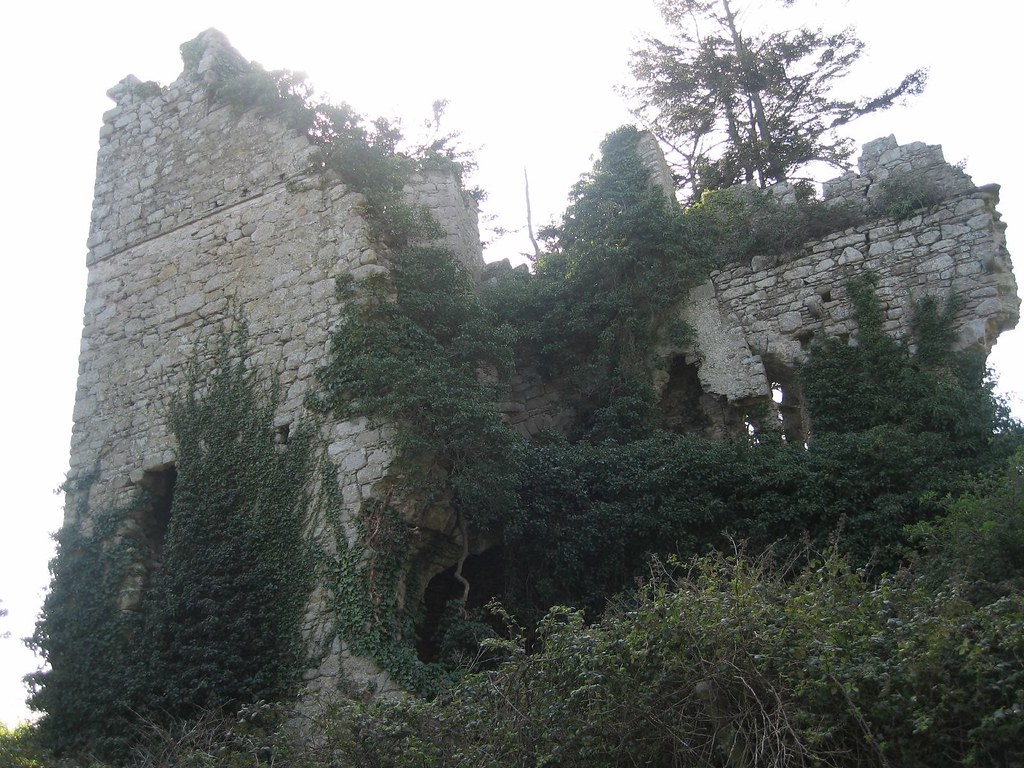
First, there’s Kilgobbin Castle, located on what looks to be private property on Kilgobbin Road. However, the large gates are always open and the castle is far removed from the residence. The castle (or what’s left of it) is only a few walls overgrown with wild shrubbery and locals just think of it as a pile of rubble. However, given the height of the walls, there’s still enough there to imagine what it may have looked like when it was in use, circa 17th century.


Just up the road further into Stepaside are the ruins of Kilgobbin Church and cemetery. Also at the site is a granite high cross from the 12th century which was uncovered in the early 1800’s.


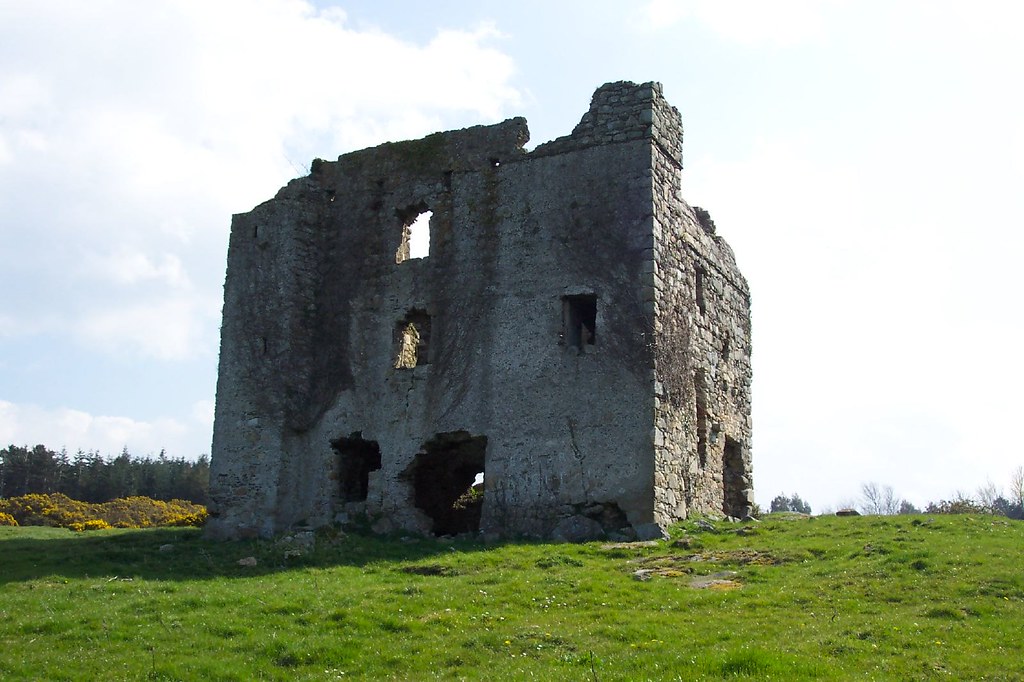
Moving on past Stepaside, through Kiltiernan and down to Rathmichael is another castle known as Puck’s Castle (pictured below). Situated in a farmer’s field, it has a great view of Dublin and the bay. King James II is known to have visited the castle in 1690 after he was defeated at the Battle of the Boyne.


Down a little further and up a gravel road is what remains of Rathmichael Church. According to Megalithomania.com, some of the stones hanging on the walls of the church show traces of pre-Celtic Neolithic art forms. (This of course isn’t to suggest that the actual church has been around since then, given the fact that neither Christianity nor "churches" existed.) While we were there, we noticed that the wall surrounding the church yard was very much intact, though overgrown in places. The place feels very secluded, until you stop long enough to realize you can hear traffic on the M50 in the distance.


Tom over at Megalithomania.com documents loads of these kinds of things around Ireland and even provides GPS coordinates for the ultra-nerdy. He also provides decent directions to the sites that we visited in particular.


26 March 2007

Big Day in Northern Ireland

It's been slow, but the process continues to move forward for Northern Ireland. (CLICK HERE for the NY Times article and HERE for the BBC.) Today, Ian Paisley (the hard-nosed British loyalist) and Gerry Adams (formerly tied to a terrorist organization) sat down at a table for the first time to discuss power sharing between the two parties. Beginning on May 8th, the Democratic Unionist Party and Sinn Fein will begin governing the UK province together, with Sinn Fein continuing to press for a united Ireland and the DUP insisting on staying tied to the UK.

In our Irish history class, the wife and I have been learning about how, for hundreds of years, successive kings of England tried to subjugate the Irish through colonization, as well as both legal and religious legislation. (In fact, in 1366 Britain even outlawed Irish people from entering cathedrals in Ireland.) From the mid-12th century on into the early 20th century, this was Ireland's relationship with Britain. It was in 1609 that the Ulster Plantation began in northeastern Ireland under James I. Lands were taken from Catholic Irish landowners and given to Protestant English colonialists.

Given the history of the conflict from an outside objective view, it's fairly easy to see how the UK's occupation of N. Ireland wasn't fair or just to begin with. However, given the situation today in a democratic society, with a small majority of N. Ireland's population preferring to stay connected to the UK, there doesn't seem to be any other realistic option but to allow democracy to run it's course. Obviously, I've simplified things down quite a bit here, but for the readers in the United States, this is the best summary I can offer (minus the bloodshed and the atrocities from both sides).

17 March 2007

11 March 2007

The Right to Live Out Your Spiritual Code

Early this last week, there was an editorial article from the Irish Times in which some remarkable statements made by Ireland's current Taoiseach, Bertie Ahern, were applauded. The statements were made at the end of February when Ahern spoke to a group of inter-faith representatives at Dublin Castle and expressed his concern to keep faith and religion in the public square. The Taoiseach was quoted as saying that people who were promoting “a form of aggressive secularism . . . would deny a crucial dimension of the dignity of every person and their rights to live out their spiritual code within a framework of lawful practice which is respectful of the dignity and rights of all citizens. It would be a betrayal of the best traditions of Irish republicanism to create such an environment.”

Previous to this quote, the journalist speaks of the word “tolerance” with a different kind of contempt than what we're typically used to seeing in the media. “. . . [Whereas] those who engage in such superstitions are to be 'tolerated', they are also to be regarded as engaging in a near-obsolescent and unmodern activity. Our society seems merely to put up with people who believe in God because such 'tolerance' is part of our liberal ideology.” (Surely he's speaking of European society and not Irish society!)

In one sense, this is ironic in a country where an inseparable mixture of religion, politics, and national identity has brought violence, division and deep resentment. As a result, one might be tempted to think people would be leaving their religious roots in droves here in Ireland. However, for various reasons, this is largely not the case. Irish people may be increasingly disillusioned with the institutionalized version of their national religion, but it appears that they are not ready to throw out belief in God altogether. Recently I came across some statistics from 2002 which said that of the 3.9 million people in Ireland, 500 claimed “atheism” (that's .01%!) and about 138 thousand claimed “no religion” (3.5%). Figures from the latest census in 2006 are due to be released later this year.

It might also be tempting to think that the Irish are a rather gullible, superstitious lot, caught in the grip of their antiquated embrace of religion, due in part to their tireless reaction to their British oppressors. However, a closer look reveals a much more thoughtful, well-educated understanding of humanity's spiritual impulse. The “spiritual code” that Mr. Ahern spoke of in his speech was informed by “considerable evidence that [religion] is, in fact, a natural and essential element of the human psyche,” to quote our Irish Times journalist.

Whereas many in today's world will point to the wars and other damage that religion has brought to humanity (eg., Richard Dawkins), a growing number of people recognize that religion and evil done in the name of religion are not the same thing. Apparently, that includes the Irish.

28 February 2007

Croke Park History

Just got wind of this ITV news report from last week. It looks ahead to the Six Nations rugby match that happened this last Saturday. It's a nice little summary of the historical significance of the match that subsequently happened without any reported problems whatsoever.


15 February 2007

Burgeoning Café Culture

After having lived a few years in an English town completely bereft of good coffee shops, I've been quite pleased with the number of cafés here in Dublin. In fact, according to an article in this month's edition of The Dubliner magazine, cafés are on the rise in Ireland's capital city by 25% in the last five years. The reason for this growth is likely the amount of disposable income in the pockets of Dubliners (ie., The Celtic Tiger).

The Dubliner article also argues that pubs are a fading cultural quirk of the past and lists the stereotypical elements of Dublin's public houses: loud music, bad food (if any), and uncomfortable seating. Personally, I've been to plenty of great Irish pubs with decent food and an environment quite conducive to socializing, but for some reason I don't think The Dubliner is known for looking at the good things in Irish tradition.

So, what are the necessary ingredients to a great café? Ambiance, comfortable seating, quality food/drink, and friendly staff. This last ingredient is my own preference and is probably reinforced by a bad experience I had recently. (I realize the price for a take-away coffee is often lower, but I never thought I'd get kicked out of an empty café for taking a seat with my paper cup!)

The Dubliner brings up some other pertinent issues in a very balanced way, like the influence of globalization (hello, Starbucks!), and the efforts of pub owners to adapt to the café culture demand. Interestingly enough, in regards to globalization, the magazine article is quick to point out that, while Starbucks gets a bad rap for its obnoxious saturation marketing, they're not the only company with an eye on world domination. Ireland's own O'Brien's sandwich shops boast 300 outlets in 12 countries.

Ireland is known around the world for friendly people and good conversation, among other things. Seems to me that a thriving café scene only serves to uphold that reputation!

10 February 2007

A Saturday in Dublin

Kristy and I went into the city centre to explore today. In particular, I wanted to visit Café Irie for lunch in the Temple Bar District. This month's issue of The Dubliner magazine has them listed as the top café in the city. It's a small, second-story place across from Luigi Malones and Urban Outfitters. There's only seating for about 15-18 people or so, but the people are very friendly and I was quite impressed with the food, including the coffee. In fact, it might need to become a regular stop-in whenever I'm in the city. (No Starbucks for this Yankee.)

After lunch, we sauntered over to check out the Saturday Food Market. The smells and sights made us wish we hadn't just eaten! We already have plans to go back next Saturday afternoon, only this time with empty stomachs.

Next, we stopped by the Oxfam book shop on Parliamant street and picked up “The Collected Poems of W.B. Yeats” for €6. Then it was back through Temple Bar where we dropped in at the Project Arts Centre just in time to see a group leaving for The Rain Party. In keeping with the art theme, we wandered down to the Temple Bar Gallery and Studios for a look through Matt Stokes' documentary exhibition on early 90's “cave raves” in the UK's Lake District.

For the first time, we also finally stopped in at the Dublin Tourism churchy-looking building. I picked up the Dublin International Film Festival programme and got really tempted to purchase the required membership to the Irish Film Institute in order to get in to some of the showings. As I was looking through the schedule, I realized that it's happening during the same week that I'll be out of town visiting my brother on business in Spain. DOH! Maybe next year.

Finally, before heading back to the LUAS, we stopped in at St. Teresa's. Always a peaceful break from the hustle and bustle of life in Dublin.